
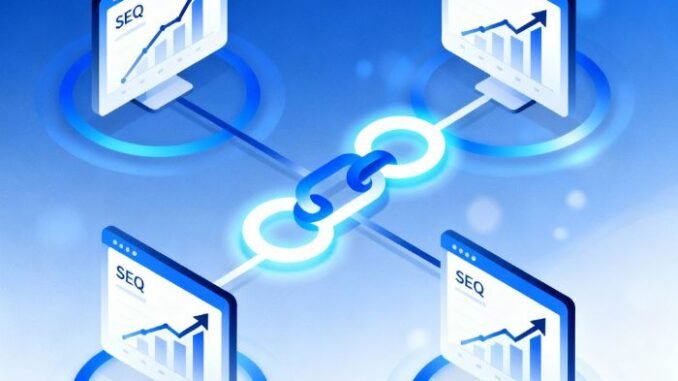
A High-Quality Backlink is a relevant, authoritative, and contextually placed link that drives trust, topical relevance, and measurable SEO value to a page. It’s built intentionally, earns clicks, and strengthens a site’s backlink profile for sustainable rankings in 2025. Mentioning AI in Digital Marketing early matters because modern link-building strategy, prospecting, and risk analysis increasingly rely on AI-driven insights and automation for scale and precision.
Table of Contents
- What Is a High-Quality Backlink?
- Why High-Quality Backlinks Matter in 2025
- The 7 Pillars of Backlink Quality
- Safe vs Risky Backlinks
- How to Build High-Quality Backlinks
- How to Evaluate Link Authority Metrics
- Auditing a Backlink Profile
- 2025 Link-Building Strategy Playbook
- Common Myths About SEO Backlinks
- Final Thoughts and CTA
What Is a High-Quality Backlink?
A High-Quality Backlink is a link from a topically relevant page on a reputable site that contextually references a resource because it genuinely adds value to readers. It aligns with search intent, sits in the main content, draws referral traffic, and strengthens domain and page-level trust signals. When repeated across credible sources, these authority backlinks compound impact and improve the overall backlink profile with durable results.
Why High-Quality Backlinks Matter in 2025
Search updates in recent years have emphasized authenticity, experience, and topical authority, making relevant backlinks more important than raw link counts. As algorithms refine spam detection, quality, placement, and source trust now outweigh volume. A High-Quality Backlink supports both rankings and real traffic, which amplifies engagement signals and future link acquisition.
The 7 Pillars of Backlink Quality
- Relevance: The linking page and site should closely match the target topic, product, or audience, creating relevant backlinks that reinforce topical authority.
- Authority: Prioritize domains with strong brand recognition and trustworthy editorial standards to build authority backlinks that move the needle.
- Placement: Links embedded within the main body content perform better than boilerplate, sidebar, or footer links due to higher contextual weight.
- Context and Anchor: Natural, descriptive anchors and surrounding context signal what the destination page is about without over-optimization.
- Traffic and Engagement: A High-Quality Backlink should be capable of sending qualified referral traffic; links that get clicks demonstrate real-world value.
- Editorial Integrity: Earned links from genuine editorial decisions carry more weight than easily acquired or self-placed mentions.
- Technical Cleanliness: Ensure the link is followed (when appropriate), indexable, not blocked, and not JavaScript-obscured, so equity can pass reliably.
Safe vs Risky Backlinks
- Safe: Contextual editorial mentions, expert quotes, digital PR placements, original research citations, niche publications, and respected industry directories.
- Risky: Scaled guest posts with templated anchors, PBNs or link farms, paid links without disclosure, mass web 2.0s, spammy forum profiles, and irrelevant blog comments.
- Rule of thumb: If it wouldn’t stand alone as a helpful citation for a human reader, it likely won’t stand long as a quality signal for algorithms.
How to Build High-Quality Backlinks
- Original Research and Reports: Publish annual benchmarks, proprietary surveys, or industry studies that others want to cite, attracting authority backlinks.
- Expert Roundups and Quotes: Offer subject-matter insights to publications and podcasts; maintain a media page and a fast response workflow.
- Strategic Guest Publishing: Write for reputable, relevant sites with audience overlap; prioritize value, author bio credibility, and natural brand mentions.
- Partnerships and Communities: Collaborate with universities, industry bodies, SaaS integrations, and niche communities where mutual value wins links.
- Local and Niche Citations: For location-based brands, build consistent NAP citations and niche directories to strengthen local SEO backlinks.
How to Evaluate Link Authority Metrics
- Domain-Level Metrics: Use blended indicators (e.g., DR/DA, referring domains growth, branded search, organic traffic) to gauge potential link equity.
- Page-Level Metrics: Assess URL’s organic keywords, impressions, internal link depth, and historical performance—the page matters as much as the domain.
- Link Authority Metrics: Treat third-party scores as directional, not absolute; corroborate with traffic, relevance, and editorial context before pursuing.
- Anchor Text Mix: Maintain a natural blend—branded, URL, partial-match, and topical anchors—to avoid over-optimization and keep a stable backlink profile.
Auditing a Backlink Profile
- Inventory and Tagging: Segment links by source type, domain authority range, topical category, anchor type, and placement (body vs boilerplate).
- Risk Assessment: Flag links with spammy footprints, irrelevant topics, aggressive anchors, or sudden velocity spikes; consider outreach or disavow in extreme cases.
- Opportunity Mapping: Find pages that attract links organically, identify content themes worth doubling down on, and restore broken links with updated assets.
- Competitive Gap: Compare top competitors’ authority backlinks to surface replicable opportunities and thematic content deficits to fill.
2025 Link-Building Strategy Playbook
- Prioritize Topics with “Link Intent”: Go after queries where people naturally cite sources—statistics, frameworks, definitions, templates, and calculators.
- Build Content-Market Fit: Align linkable assets with clear audience outcomes; solve real problems that deserve citation, not just clicks.
- Smart Prospecting with AI: Use AI-assisted scraping and classification to detect fit, context, and editorial openness at scale without sacrificing quality.
- Maintain Consistency: Aim for steady acquisition from diverse, relevant domains rather than bursts from a single source or network.
- Measure What Matters: Track referring domains, organic traffic, assisted conversions, and link-driven sessions—not just vanity scores—to evaluate ROI for SEO backlinks.
Common Myths About SEO Backlinks
- “All high-DR links are great”: Authority without relevance or context is weaker; a niche-relevant DR 40 link can outperform a generic DR 80 link.
- “Follow-only or nothing”: Strategic nofollow or sponsored links from top publications can still drive signals via traffic, brand searches, and future citations.
- “More is better”: In 2025, fewer High-Quality Backlinks placed in editorial contexts frequently outperform large quantities of low-value links.
Practical Checklist: Is It a High-Quality Backlink?
- Relevance: Does the linking page cover the same topic or intent as the destination?
- Authority: Is the site reputable, with real traffic and editorial standards?
- Placement: Is the link within main content, surrounded by supportive context?
- Anchor: Is the anchor natural and helpful rather than stuffed or exact-match heavy?
- Traffic: Can the link realistically drive qualified clicks and user engagement?
- Editorial: Was the link earned because the content deserved it?
- Technical: Is the link followed (when appropriate) and indexable without obstacles?
Conclusion and Next Steps
High-Quality Backlinks win in 2025 when they’re relevant, contextual, and earned from reputable sources that send real traffic and trust. To put this into action today, shortlist 20 target publications, pitch one original data insight per week, and build one linkable asset per month to steadily elevate backlink quality, link authority metrics, and overall backlink profile strength. For deeper learning, explore related topics like AI in Digital Marketing for smarter prospecting and risk control, then map these approaches into a documented link-building strategy with quarterly goals. Marketing Metrics for executive clarity and budget defense while exploring Our homepage and partners like SEOShastra for execution support.
Leave a Reply