
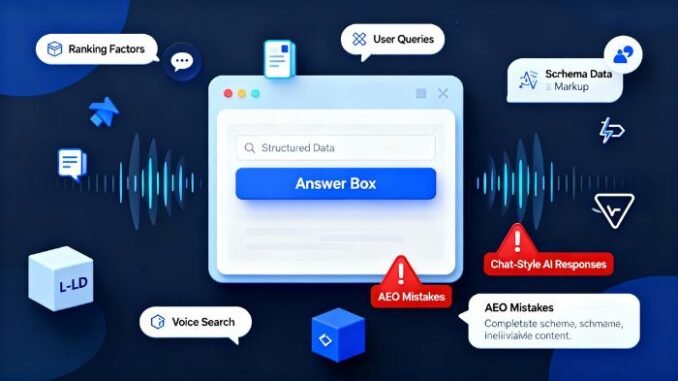
Answer Engine Optimization is no longer “future SEO”—it is the survival layer between your content and AI search engines that decide what users see first. High-Quality Backlinks still matter, but they cannot save you if ChatGPT, Perplexity, Gemini, and Bing Copilot never pick your site as a trusted answer source.
With Google’s AI Overviews (formerly SGE), Bing Copilot, and tools like Perplexity and ChatGPT, users increasingly get complete answers without ever clicking a website. AI summaries, zero-click searches, and featured answers are quietly stealing traffic from sites that still optimize only for blue links. Studies show that close to 60–65% of Google searches now end without a click, meaning most users find what they need directly on the results page.
What Is Answer Engine Optimization (AEO)?
Answer Engine Optimization is the process of making your content understandable, quotable, and highly trustworthy for AI systems that generate answers, summaries, and recommendations. It focuses on helping engines like Google AI Overviews, Bing Copilot, Perplexity, and ChatGPT extract clear, structured answers instead of just ranking pages by links and keywords.
Traditional SEO optimizes for positions on a clickable SERP, while AEO optimizes for being selected as the answer inside AI-generated panels, summaries, and conversational search threads. In this model, AI-driven ranking systems care less about who is number one in blue links and more about who explains concepts cleanly, covers topics deeply, and backs claims with credible sources.
The shift to zero-click searches makes this even more urgent. Recent studies indicate that around 60–65% of searches now end without a visit to any website because users get instant answers from featured snippets, knowledge panels, and AI summaries. AEO techniques exist to help your brand stay visible, cited, and trusted inside those experiences.
Mistake #1 – Not Optimizing for Conversational Queries
AI search engines are built around natural, conversational search—questions like “how do I fix…”, “what is the best way to…”, or “which tool should I use for…”. When content only targets short, rigid keywords and ignores conversational search, AI models struggle to match it to real user questions. This reduces your chances of being surfaced in answer boxes, chat-style threads, or voice search responses.
To fix this, map real user questions across the journey (awareness, comparison, decision) and create sections that answer them in natural language. Use headings that mirror conversational queries, add concise 1–3 sentence direct answers, and then expand with deeper explanations, examples, and data. This aligns your content with user intent optimization and makes it easier for AI systems to quote you in featured answers and conversational search flows.
Mistake #2 – Missing Structured Data & Schema Markup
Many sites still publish great content but skip structured data SEO and schema markup, making it hard for machines to interpret the context. Without FAQ, How-To, Product, and Organization schema, AI search engines lack clear signals about your page type, entities, and relationships—so they often choose better-structured competitors when generating summaries.
Implement schema markup on key content types:
- FAQ schema for Q&A-style sections that match conversational queries
- How-To schema for step-based guides and tutorials
- Product schema for eCommerce pages with price, availability, and reviews
This structured layer feeds AI-driven ranking systems with machine-readable context, increasing the odds that your site powers zero-click responses, AI overviews, and featured answers in SERPs.
Mistake #3 – Weak Topical Authority and Thin Content Clusters
AI engines do not just look at a single page; they evaluate whether your entire site demonstrates topical authority on a subject. When your content is scattered, shallow, and lacks interlinked content clusters, you send weak signals about expertise, which lowers your chances of being cited in AI summaries or Perplexity-style multi-source answers.
To fix this, build content clusters around core themes (for example, “Answer Engine Optimization” or “semantic SEO”) with a strong pillar page and multiple deep supporting articles. Interlink them with descriptive anchor text and ensure each piece adds unique subtopic depth—covering definitions, step-by-step guides, use cases, tools, and FAQs. This cluster approach strengthens topical authority, a major factor for AI search engines that need trustworthy, expert sources.
Mistake #4 – Content Not Optimized for AI Summarization
Long, fluffy intros, buried answers, and walls of text are deadly in an age where models scan pages for clear, extractable information. When your content hides the actual answer under multiple generic paragraphs, AI systems either misinterpret your page or choose a competitor with sharper structure and more scannable data.
Adapt your formatting for AI summarization:
- Start sections with a direct, one-paragraph answer to the main question
- Use short paragraphs, bullet points, and clear subheadings
- Include stats, definitions, and frameworks in concise sentences that are easy to quote
This makes it easier for AI Overviews, Bing Copilot, and other AI search engines to build accurate snapshots of your content and attribute those insights back to your brand.
Mistake #5 – Ignoring User Intent & Not Providing Direct Answers
Many articles chase keywords but ignore the real “job” the user is trying to get done, leading to content that talks around the question instead of solving it. AI models are trained to reward content that directly satisfies user intent—informational, navigational, transactional, or investigative—using clear and authoritative responses. When your page fails that test, it gets de-prioritized as a source, even if it ranks decently in traditional SERPs.
The fix is to align every section with a specific intent and answer hierarchy: give a short, direct answer first, then provide details, then add proofs (examples, data, case studies, or references). Combine this with transparent signals of expertise and trust—author bios, cited sources, updated dates, and clear disclosures—to make your pages safer choices for AI engines that do not want to hallucinate critical information.
Evidence: AI Search, Zero-Click Growth, and Traffic Loss
Multiple independent studies now show that a majority of searches result in no external click, with estimates around 60–65% of queries ending directly on the SERP. Google’s rollout of AI Overviews (from the earlier SGE experiment) expanded AI-generated summaries into the main search interface, especially for complex and multi-step questions.
At the same time, AI-native platforms like Perplexity and deeply integrated assistants like Bing Copilot are becoming real research and discovery channels, not just experiments. Some brands have already reported real revenue hits as their high-quality content powers AI answers while user visits decline, proving that visibility without attribution is a real business risk.
Strategies to Fix Your Answer Engine Optimization
1. Structure Content for Direct Answers
Design each key section to work as a self-contained answer block. Begin with a 2–4 line summary that clearly addresses the main question, followed by deeper explanation, data, and examples. This supports featured answers, zero-click searches, and AI summarization while still serving human readers who want depth.
2. Add and Maintain Schema Markup
Audit your existing content for missing schema and gradually roll out structured data SEO across your site. Use FAQ, How-To, Product, Article, and Organization schema where relevant, and validate regularly with testing tools to avoid technical errors that break eligibility for rich and AI-enhanced results.
3. Optimize for Conversational Queries and Voice Search
Research natural-language questions from tools, customer chats, forums, and social media, then incorporate them into headings, FAQs, and body copy. Target longer, spoken-style queries that map well to voice search optimization and conversational search experiences in AI engines, making your content a better candidate for spoken and chat-based responses.
4. Build Deep Content Clusters and Topical Authority
Pick 3–5 core themes and build pillar pages with 10–20 supporting articles each, interlinked thoughtfully. Cover definitions, comparisons, tools, step-by-step guides, troubleshooting, and advanced strategies so AI systems can reliably treat your domain as an authority on that topic and surface your pages in AI-driven ranking environments.
5. Strengthen Expertise, Trust, and Transparency
Add clear author bios, cite reputable external sources, update content dates, and clarify methodologies or data sources wherever you use stats. AI search engines increasingly prefer sources that look maintained, credible, and transparent—traits that also help with traditional search visibility and brand trust.
Mistakes vs. AEO Solutions
| AEO Mistake | Impact on Visibility | Key Solution |
| Not optimizing for conversational queries | AI engines struggle to match your content to real user questions in chat interfaces | Add Q&A sections, natural-language headings, and concise direct answers for core questions. |
| Missing structured data & schema markup | Content is harder to interpret for AI and rich results, reducing featured visibility | Implement FAQ, How-To, Product, and Article schema site-wide and keep it validated. |
| Weak topical authority & thin content clusters | Site appears less authoritative, lowering chances of being cited in AI summaries | Build deep, interlinked content clusters around core topics with strong pillar pages. |
| Content not optimized for AI summarization | AI systems skip your pages in favor of clearer, more scannable sources | Use short intros, direct answers up top, bullets, and clear subheadings with key facts. |
| Ignoring user intent & direct answers | Pages talk around the problem instead of solving it, reducing AI trust | Map content to intent, answer first, then elaborate, and show clear expertise and sources. |
Conclusion: AEO Is Not Optional Anymore
Answer Engine Optimization is rapidly becoming the core layer of digital visibility, deciding whether your brand appears inside AI search engines, zero-click panels, and conversational assistants—or disappears behind anonymous AI summaries. As AI Overviews, Bing Copilot, Perplexity, and similar tools keep growing, brands that adapt their content for structured, intent-focused, and AI-friendly answers will own the next era of search visibility.
Start upgrading your AEO techniques now: restructure key pages, add schema, deepen your content clusters, and write in a way machines can safely quote and humans can instantly trust. Treat this as a long-term investment in search visibility, reputation, and revenue—and when you look for advanced frameworks or case-study-backed tactics, learning hubs like SEOShastra can be a powerful ally in your optimization journey.
FAQs on Answer Engine Optimization
1. What is Answer Engine Optimization in SEO?
Answer Engine Optimization is the practice of optimizing content so AI systems like Google AI Overviews, Bing Copilot, Perplexity, and ChatGPT can easily extract, trust, and cite your answers in their responses.
2. How is AEO different from traditional SEO?
Traditional SEO focuses on ranking pages in organic listings, while AEO focuses on being selected as the answer inside zero-click results, AI summaries, and conversational search experiences.
3. Why are zero-click searches important for AEO?
Because 60–65% of searches end without a click, brands must optimize for visibility inside featured answers, panels, and AI-generated summaries rather than relying only on organic clicks.
4. Which AEO techniques help with AI-driven ranking?
Key techniques include structured data SEO, FAQ/How-To schema, clear answer blocks, topical content clusters, and strong signals of expertise and trust. These help AI rank and quote your content more confidently.
5. How does Answer Engine Optimization support voice search optimization?
By structuring content around natural, conversational queries and providing short, direct answers, your pages become better matches for voice assistants that need concise, spoken-friendly responses.
Leave a Reply